shiny.element brings Element Plus
2.14.7 – its inputs, tables, trees, menus, dialogs and the rest – to
Shiny. Each component reports through input$<id> and
is updated from the server, like any other Shiny input. Element Plus,
its icons and Vue 3.5 ship inside the package, so an app needs no
network.
el_page() is the page: it loads Vue and Element Plus and
gives the page Element Plus’s look.
library(shiny)
library(shiny.element)

ui <- el_page(
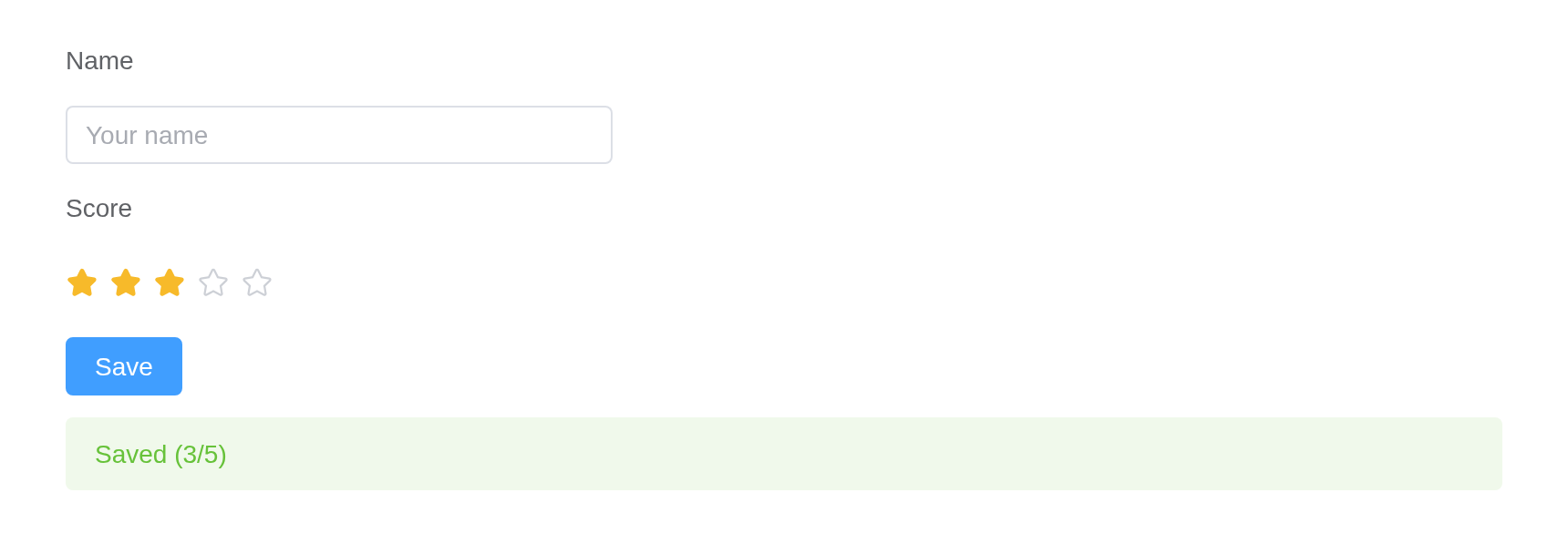
  el_input("name", label = "Name", placeholder = "Your name", width = "300px"),
  el_rate("score", label = "Score", value = 3),
  el_button("save", "Save", type = "primary"),
  tags$div(style = "height: 12px"),
  el_alert("hint", title = "Nothing saved yet", type = "info", closable = FALSE)
)

server <- function(input, output, session) {
  observeEvent(input$save, {
    update_el_alert(
      id = "hint",
      type = "success",
      title = paste0("Saved ", input$name, " (", input$score, "/5)")
    )
  })
}

shinyApp(ui, server)Inside another page function – fluidPage(), bslib’s
page_sidebar() – call use_element() once
instead, giving it the page’s theme so Element follows it:
A component with a value reports it as input$<id>,
on load and on change. The server changes it with the matching
update_el_*(), runs one of Element’s methods with
call_el(), and shows a message, a notification or a
question with el_message(), el_notification()
and el_message_box(). Element’s events arrive as
input$<id>_<event>.
server <- function(input, output, session) {
  output$chosen <- renderText(input$city) # read
  observeEvent(input$reset, update_el_select(id = "city", selected = "Beijing"))
  observeEvent(input$clear, call_el(id = "orders", method = "clearSelection"))
  observeEvent(input$orders_row_click, el_message(message = "Row clicked"))
}el_form(), shinyvalidate, dates.